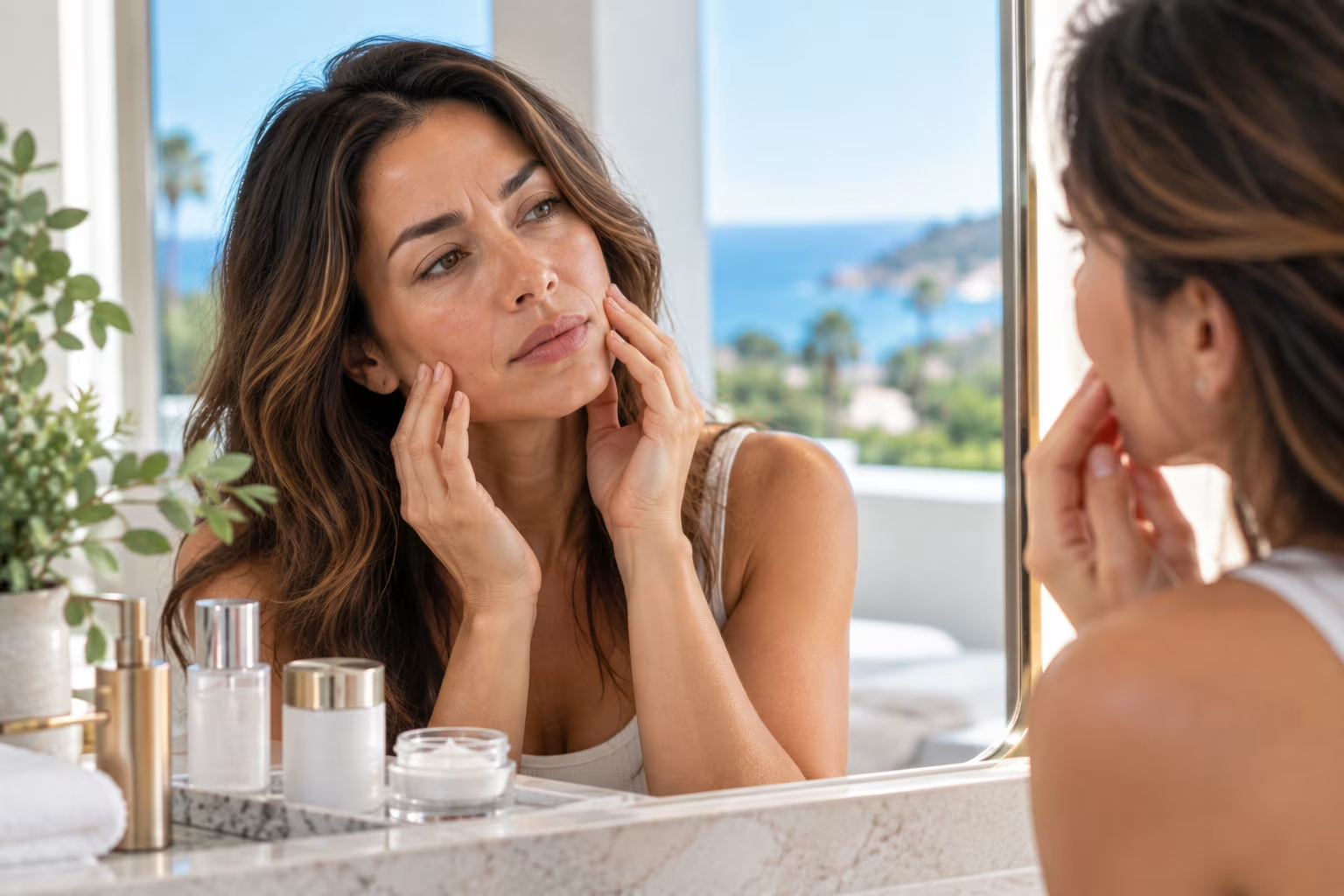
You caught your reflection in a car mirror after a long week and thought, "I look tired." Not older exactly, just flatter, duller, a little worn down. So you did what most of us do. You added a new hydrating serum, drank more water, slept an extra hour, and waited for your glow to come back.
Sometimes that works. Sometimes it doesn't, and that's usually the moment people start wondering if what they're actually seeing isn't dehydration at all, but the earliest signs of lost facial volume. It's one of the most common points of confusion we hear at our Newport Beach practice, especially from people in their twenties and early thirties who are just starting to pay closer attention to their skin and want to understand what's actually happening before they commit to anything.
This is a genuinely useful question to sit with, because dehydrated skin and volume loss can look strikingly similar on the surface, even though they come from completely different places and call for completely different solutions. Below, we'll walk through how to tell them apart, why the two often get confused, and where a treatment like Restylane fits into the picture, since it happens to address both hydration and structure at the same time.
What Does Dehydrated Skin Actually Look Like?
Dehydrated skin usually shows up as tightness, dullness, fine lines that seem to appear and disappear throughout the day, and a general lack of bounce when you press on your cheek. It's a temporary lack of water in the skin, not a loss of underlying tissue.
Dehydration tends to fluctuate. You might notice it more after a flight, a salty meal, a night of poor sleep, or too much sun at the beach, all of which are easy to come by if you live near the Newport Beach coastline. Skin that's dehydrated often looks better within a day or two of drinking more water, cutting back on alcohol, or switching to a richer moisturizer. If a change in your routine noticeably improves how your skin looks, that's a strong sign you're dealing with hydration, not structural volume.
Common Signs You're Just Dehydrated
- Skin feels tight, especially after cleansing
- Fine lines look deeper in the morning and soften by evening once you've had water and moisturizer
- A general "dullness" rather than a specific hollow or flat area
- Improvement within 24 to 48 hours of better hydration habits
What Does Actual Volume Loss Look Like?
Volume loss looks like specific areas of the face becoming flatter, hollower, or less supported over time, and unlike dehydration, it doesn't bounce back with water or skincare because it isn't a moisture issue. It's a change in the fat pads, collagen, and structural support beneath the skin.
This is the part that catches a lot of younger patients off guard. Volume loss isn't only something that happens in your fifties or sixties. Genetics, sun exposure, stress, rapid weight changes, and even natural facial anatomy can cause subtle volume shifts as early as your mid to late twenties. It's rarely dramatic. It's usually just a slight hollow under the eyes that makes you look tired even after a full night's sleep, lips that seem to have lost a bit of their natural definition, or cheeks that don't quite catch the light the way they used to in photos.
Common Signs of Volume Loss
- Under-eye hollows that create shadowing regardless of how much sleep you get
- Cheeks that look flatter or less full, especially from the side
- Lips that appear thinner or less defined, even without visible lines
- The "tired" look persists no matter how well-rested or hydrated you actually are
Why Do People Confuse the Two So Often?
People confuse dehydration and volume loss because both can produce the same general impression of looking tired, dull, or "off" without an obvious cause. The visual overlap is real, especially in early stages, which is exactly why so many people spend months adjusting their skincare routine before ever considering that the issue might be structural.
It doesn't help that skincare marketing leans heavily on words like "plumping" and "volumizing," which are accurate for surface hydration but can create the impression that a serum can do what only actual tissue support can do. A hydrating product plumps the outermost layers of skin temporarily. It cannot rebuild lost structural volume beneath the skin. That distinction matters, because it's the difference between treating a symptom and addressing the actual cause.
Why Under-Eye Hollows and Flattening Cheeks Get Mistaken for "Tiredness"
Under-eye hollows and flattening cheeks get mistaken for tiredness because the shadowing they create mimics the exact look of sleep deprivation, even when someone is perfectly well rested. The brain reads shadow and contour changes as fatigue cues long before it registers them as structural changes.
This is especially common with under-eye hollows, since even a small loss of volume there creates a shadow that reads as a dark circle. No concealer fully corrects it because the problem isn't pigment, it's the missing support underneath. The same goes for cheeks. A subtle flattening changes how light hits your face, which can make you look "washed out" in photos or on video calls well before it registers as an aging concern in the mirror.
Can Restylane Address Both Hydration and Volume at the Same Time?
Yes, and this is really where Restylane stands apart from a purely cosmetic skincare routine. Restylane is a hyaluronic acid based filler, and hyaluronic acid is a substance your skin already produces to bind and retain moisture. When it's used as a filler, it adds gentle structural support in areas that need it while also drawing in and holding hydration in the surrounding tissue.
That dual action is part of why Restylane has become such a popular starting point for people who want to address early volume changes without looking "done." Because it's formulated to integrate smoothly with the skin's own tissue, results tend to look soft and natural rather than obviously augmented, which matters a great deal to patients who are more interested in looking like a well-rested version of themselves than a dramatically different one. If you're weighing your options, our dermal filler page walks through how Restylane and other HA fillers are used across different areas of the face.
Am I a Good Candidate for Restylane If I'm Not Sure How Much Volume I've Actually Lost?
You're a reasonable candidate for a Restylane consultation even with mild or uncertain volume loss, because an in-person assessment is exactly how providers distinguish surface dehydration from structural change. You don't need to have already diagnosed yourself correctly before booking a visit.
This is where a lot of people, especially those newer to injectables, hesitate the longest. There's a real fear of "overdoing it" or getting more filler than a subtle concern actually warrants. A thoughtful provider will often start conservatively, sometimes even recommending you hold off and revisit your skincare routine first if dehydration genuinely appears to be the bigger factor. The goal is always the smallest, most natural intervention that gets you the result you're actually looking for, not the biggest one. Our team at The Retreat Wellness + Aesthetics takes this approach with every consultation, and if you'd like a low-pressure way to start the conversation, our self-assessment tool is a good first step before you ever come in.
What Should I Expect During Recovery After Restylane?
Most people experience mild swelling or slight bruising at the injection sites for a few days, with results settling into their final look within one to two weeks. Restylane is not a surgical procedure, so downtime is minimal, and many patients return to normal activities the same day.
Because Newport Beach living often means sun, salt water, and being outdoors, your provider will typically recommend avoiding direct sun exposure and strenuous exercise for the first day or two, along with icing as needed to manage any swelling. Results generally last anywhere from six months to a year depending on the treatment area and your individual metabolism, which is one reason it's such an approachable option for people who want to try a light, reversible treatment before considering anything more permanent.
How Is Restylane Different From Just Using More Hyaluronic Acid Serum?
Restylane and hyaluronic acid serum both use the same core ingredient, but a serum works on the surface of the skin while Restylane is placed beneath it to add structural support and volume. A serum can meaningfully improve hydration and texture, but it cannot lift a hollow area or restore lost fullness to a cheek or lip.
This is a fair and increasingly common question, particularly among patients who already have a solid skincare routine and want to understand what more Restylane could realistically offer. Think of it less as a replacement for good skincare and more as the next layer, addressing what topical products simply were never designed to reach.
Frequently Asked Questions
How do I know if I need better hydration or if I actually need filler? Try improving your hydration habits and skincare routine for one to two weeks first. If the dullness or flatness noticeably improves, it was likely dehydration. If specific areas like your under-eyes, cheeks, or lips still look hollow or flat despite better hydration, it may be worth a consultation to see if Restylane could help restore that structure.
Is Restylane only for people who already have visible signs of aging? No. Many people who use Restylane are addressing early, subtle changes, sometimes described as "prejuvenation," rather than waiting until volume loss becomes more noticeable. Starting light and conservative is a common and reasonable approach.
Will Restylane make me look "overdone" or unnatural? When used conservatively and by an experienced provider, Restylane is designed to blend with your natural tissue rather than sit on top of it. Most patients are aiming for, and achieve, a subtle, well-rested look rather than a dramatic change.
How long does a Restylane appointment typically take? Most Restylane appointments take about 30 to 45 minutes, including numbing time, making it a manageable option even for a lunch break appointment.
What if I decide I don't like the results? Restylane is not permanent, and results gradually fade over time. If you're ever unhappy with results sooner than that, a filler dissolver is also an option. You can read more about how that process works on our filler dissolver page.
So, Water Bottle or Wrinkle Relaxer? Neither, Actually
The honest answer is that most people don't need to choose between better skincare and injectables, because they're solving two different problems. Good hydration habits will always be part of healthy, glowing skin, and no filler replaces that foundation. But if you've genuinely given your skin routine a fair shot and certain areas still look flatter or hollower than the rest of your face, that's worth a real conversation rather than another serum purchase.
This article was updated for September 2026 to reflect current approaches to early volume assessment, and if you're still not sure which category your skin falls into, that's exactly what a consultation is for. Take our self-assessment or reach out to our team to talk through what you're seeing and figure out, together, whether it's a hydration fix or something Restylane can gently help restore.
